

A parent asked about helping her young son with a half-moment-long traumatic experience that he recently had. He came out of it unhurt, but really frightened. That evening, he talked about it again and again, and was clingy and worried at bedtime. Since then, all kinds of questions and thoughts about death are occurring to him. This mother wondered how to help him recover his confidence after this childhood trauma.
It’s a very good sign that your son was talking a lot and showing you his feelings after his brush with helplessness. Trusting you with his thoughts and worries is the first step in healing childhood trauma. The fact that his mind keeps going to this place of worry means that he’s looking for more help. Here are some ideas to work with.
Fear upends your child’s ability to process his experience
A traumatic experience like his, even one that turns out well, creates a knot of fear in a child’s emotional memory. That knot is a bundle of all the sights, sounds, and physical perceptions he took in during the seconds he was in danger, glued together by a stark shot of emotion—fear.
His mind is not going to be able to process the details of what happened to him, to sort out the experience, store what can be learned, and drop it and move on, until he’s been able to fully and safely express his innate reaction to fear.
A child in the midst of a traumatic moment is in danger. His perception of danger triggers an internal “fight or flight” response. If he can’t flee, and can’t fight, his body goes into “wait it out” mode, but is still in an emotionally charged state of fear.
His mind records the emotions that go with the “danger of death!” perception, along with all the information that his mind encounters during the threatening moments. All that information is wadded together with the feeling of fear.
He can’t learn from the experience, because every time his mind tries to access one small bit of the information he took in, out comes the whole emotional charge. The experience can’t be sorted. But his mind wants to try.
So a child will talk about the experience, with emotion lurking not far under the surface. Or he will set up games that frame his fear in order to try to process it. Or he will experience the fear once again, full on, at the mere sight of something vaguely related to what he remembers, or wrapped in a dream that he wakes from in terror.
How children recover from a fearful incident
Children have a natural emotional processing system they try to use after a frightening incident. We sometimes get in their way, but they do their best to offload the emotion of fear. You’ll see your child using this elegant process if you see him trembling, screaming, or crying wildly after an incident like that. Support this process as best you can.
Do your best not to inject your fears or anger into the situation.
To help a child release the fear lodged in his mind , it usually takes a safe, quiet, relatively unruffled person to anchor him. It’s safest for the frightened child when it’s his emotion that’s the focus, not the adult’s upset about what just happened.
Of course, for a parent not to be upset after a child has been in danger is an almost superhuman feat. When the parent panics or becomes angry, his fear transfers into the child, who then needs to heal from what happened to him and also the added fear he felt when his parent reacted.
Stay close, Staylisten.
So, for any “next time” that might occur, as soon as you are able to notice that your child is alive and is going to be OK, it will help for you to say very little, move in close, pay attention, and let him talk, cry, tremble or scream. Give him the safety and the time to fully feel the very uncomfortable emotions that follow a trauma.
Make sure no further harm can be done, then stay right with your child, receive whatever reaction he has, and don’t hurry on to do anything. The longer you can stay right where it happened (or if that’s not safe, then very close by), and pay close attention to whatever feelings pour out of him, the better he can loosen the hold of the fear he just experienced.

Often, a child gripped by fear wants to cling to his parent and stare over the parent’s shoulder or bury his head in the parent’s body. The child appears to be comforted, but can’t engage in a relaxed way with anyone, because he’s not finished processing the highly uncomfortable feelings he needs express before he can walk away unafraid in the end.
Hold him close, but keep turning him so he faces you—he needs to be able to meet your gaze if he chooses. Most frightened children can’t and won’t make more than fleeting eye contact with their parents for awhile, because eye contact intensifies their release of fear. So offering eye contact at every possible moment is very important in maintaining a child’s immediate sense of safety and support, and in keeping the noisy emotional healing process going.
Don’t get busy alleviating a child’s panic. Your child needs you to anchor him.
A child will sometimes become panicked after a fright or shocking event, and jump up and down in a kind of tantrum, begging to leave, or to have his comfort item brought to him, or to get some water—he feels tremendous urgency about something.
The danger the child has experienced transfers from the incident, now over, to the present moment, as if the real issue were that he needs that object, or that change in the situation. Don’t accommodate your child’s avoidance of difficult feelings, but do reassure him.
Your position needs to be, “Honey, we’re not going to leave right now. You’re safe. You made it. We can stay right here.” Or, “I know you want your blanket. But it’s in the car. We’ll get it later. Right now, you have me. I’m keeping you safe.” Or, “Honey, I know you’re thirsty. We’ll get water in a bit. Right now, I want to stay with you. Being right with you is very important to me.”
If you move your focus to trying to make your child comfortable, it may derail the emotional processing, and he will carry this same intense sense of unease into later times. Children emerge from traumatic experiences more completely if someone understands that this panic is a byproduct of the experience that’s already been survived. It needs to be shared for healing to be complete.
Healing takes place when a child has the safety of his parents’ arms, the time and permission to show how awful he feels, and steady reassurance that all is well.
A child will continue to try to work through leftover fear.
When a child can’t work all the way through his feelings about a trauma right when it happens, those feelings erupt again and again, changing the child’s behavior, and sometimes even his personality. But some simple interventions on your part can help your child feel safe enough to revisit the feelings, now stuck inside his emotional memory, and process them.
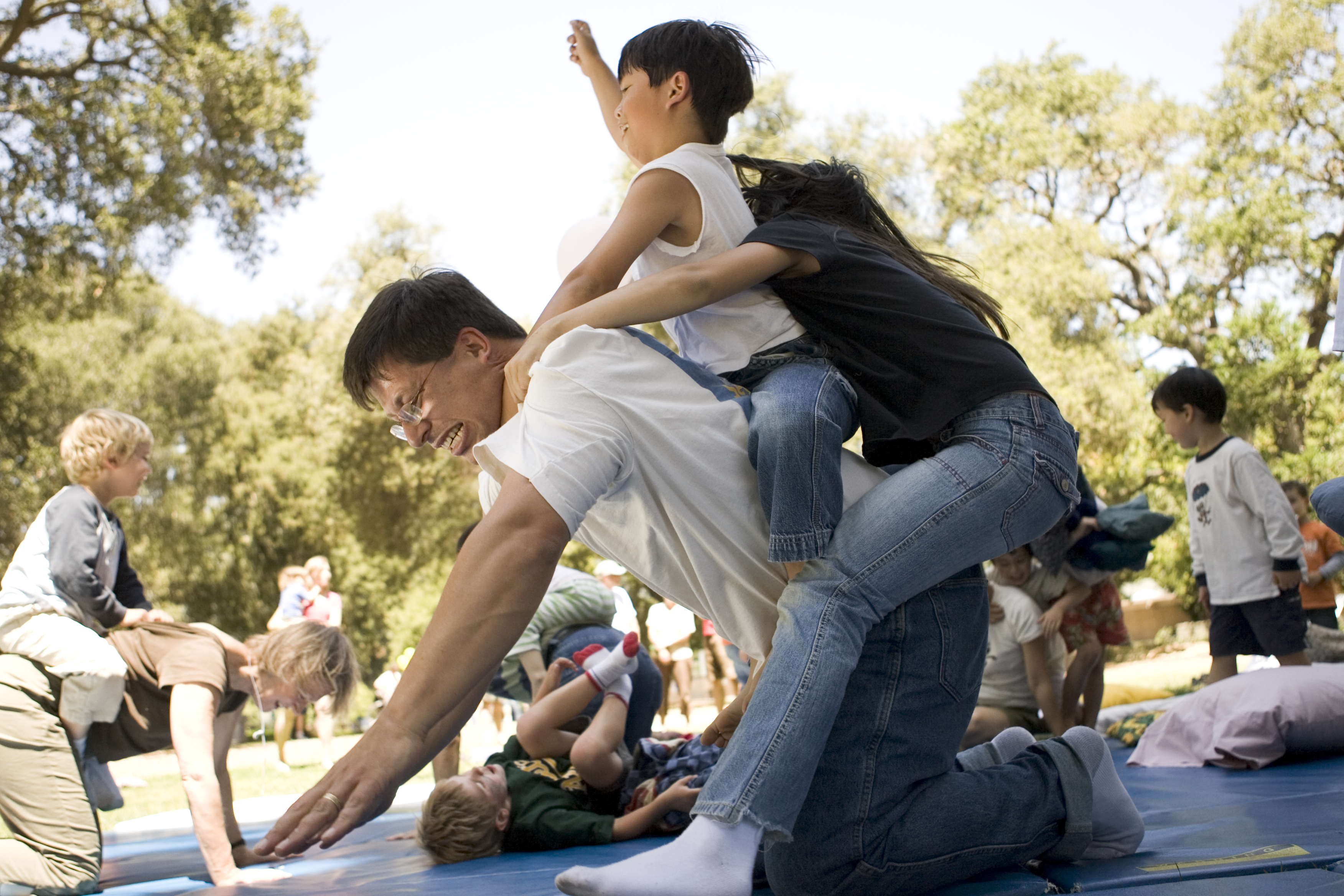 Special Time is the Listening Tool to start with. There’s an article on our web site about how to do Special Time: you put your child in charge of what you will do together, clear your mind, bring an attitude of warm interest and delight, and set a timer. Your child has one hundred percent of your attention for, say, twenty minutes.
What he does during that twenty minutes is less important than your focus on connecting during that time, with added eye contact, added warmth, added affection, and added enjoyment. Children will sometimes set up games that show how they felt about the traumatic moments they experienced.
Sometimes, the Special Time is spent doing things together that seem fairly ordinary, but afterward, big feelings erupt over a piece of toast cut “wrong,” or who gets to sit in the red chair at the table. Sometimes, nightmares arise that encapsulate a child’s terror, and you can help your child work it through that way.
Your child needs your warmth and attention to face feeling afraid again. And you need to let him have these occasions when he’s wildly upset over some small thing, so you can move in, anchor him, and promote this messy but efficient process of getting panic and terror out, so your love and reassurance can take its place in his emotional memory.
Play with laughter (but without tickling) is also deeply healing.
Playlistening is another Listening Tool that helps children overcome fears they’ve acquired from traumatic experiences. You notice what lets your child giggle, and you do more of that. Laughter is a powerful release of the lighter fears a child carries, and it helps a child’s perspective to have the upper hand in play.
For instance, I did extensive work with a child in our school who had had five major surgeries to correct a birth defect by the time he was four years old. He was a timid and quiet child. He never exerted himself in play.
Somehow, our play evolved into a game in which I would hide under a big beanbag, and he would run around it. I would “hiccup” under the beanbag, and he would laugh very hard. I would hiccup, he would laugh.
For weeks, that was the game. Slowly but surely, he became brave enough to jump on me under the bag, and then I would hiccup him off. Or he would throw a ball at me under there. More hearty, loose laughter.
On and on the game went, day by day, until he was running at me, jumping on me, and I had to work hard to shake him off, all to great laughter. As his bravery in play progressed, he made good strides in talking, standing up for himself, and engaging with other children.
For a child who has been through an incident of physical danger, you might try playfully running to him when he has a very minor bump or tumble, “Emergency, emergency rescue! Hello, sir, how can we help? Hmmm, let me see. Is it the leg? (You shake his leg, pat it all over, move it around). No, not the leg, maybe it’s the toes. Sir, may I count your toes? Well, all the toes are here, maybe it’s the cheek. Let me see that cheek, sir!”
Make a big, friendly, goofy fuss. See, when you inspect in this slightly silly way, if he can laugh a bit, or try to run away, so you can run after him, “Sir, sir! I’m your emergency helper! Sir, please don’t go! I have to check out all your parts, sir!”
He has the upper hand, but you keep pursuing. He keeps showing you he’s OK, but you play a kind of “happy puppy” version of an emergency worker. Be all over him with affection. Watch what elicits a laugh, and do that some more.
You will need listening time for yourself, to be patient enough to help your child.
To be relaxed while you do this, you are probably going to need someone to listen to how it was for you to go through this experience with him. Your anger, your surprise, your worry, your own fears, and whatever memories this incident triggered for you about similar moments in your own life—these are things to talk to another adult about, so your own tears and trembling can flow.
You, too, have been through a trauma. You’ll be a much more effective listener for your child once the worries locked into your own system are expressed and released.
Don’t try to just tell the story. Go ahead and show your fears, go ahead and let that tantrum out. Go ahead and cry hard. He made it, but he was in danger. You saw. You felt. Tell someone how it was, and every detail you remember.
Using Listening Tools, you have the power to heal your child’s traumatic experience.
Special Time, Playlistening and Staylistening will help you partner with your child to offload the fright now stored in his memory. As he faces his fears, both playfully and gripped by panic in your arms, he’ll have your support and the safety of an entirely benign situation.
Time by time, his mind will release chunks of feelings, so that he is no longer governed by the leftover fear from his experience. And you, helpless during that moment, will have worked effectively and powerfully with him to help him recover.